 Denys Danyliuk
Key Takeaways
- The door gasket is the cheapest part in the oven and the one with the biggest effect — a flattened seal makes the element run hot every bake.
- Wipe spills while the cavity is warm; once a spill has been through a second bake it is bonded to the enamel.
- The self-clean cycle is the most thermally punishing thing the appliance does — two or three times a year, not monthly.
- Never line the oven floor with foil: it traps heat against the lower element and blocks cavity airflow.
- Ovens drift silently. Check against a standalone thermometer twice a year and correct a gap over 25°F.
The Bottom Line
Four habits carry almost all the benefit: wipe spills warm, check the gasket monthly, keep the convection guard clear, and verify the temperature twice a year. Everything else is a repair, not maintenance.
Ovens fail quietly. Nothing breaks on a Tuesday — the temperature drifts a few degrees a year, the door seal flattens, the fan bearing dries out, and one day a recipe that always worked comes out wrong. Almost all of it is preventable, and none of it takes special tools. Here is the maintenance that actually changes how long a Bosch oven lasts.
| Task | How often | What it prevents |
|---|---|---|
| Wipe spills while the oven is warm | After each use | Baked-on carbon, smoke, odors |
| Check the door gasket by hand | Monthly | Heat loss, uneven baking |
| Clean the fan guard and vents | Quarterly | Convection faults, overheating |
| Verify temperature with a thermometer | Twice a year | Silent calibration drift |
| Inspect hinges and door alignment | Twice a year | Seal failure, glass stress |
The Door Seal Does More Than You Think
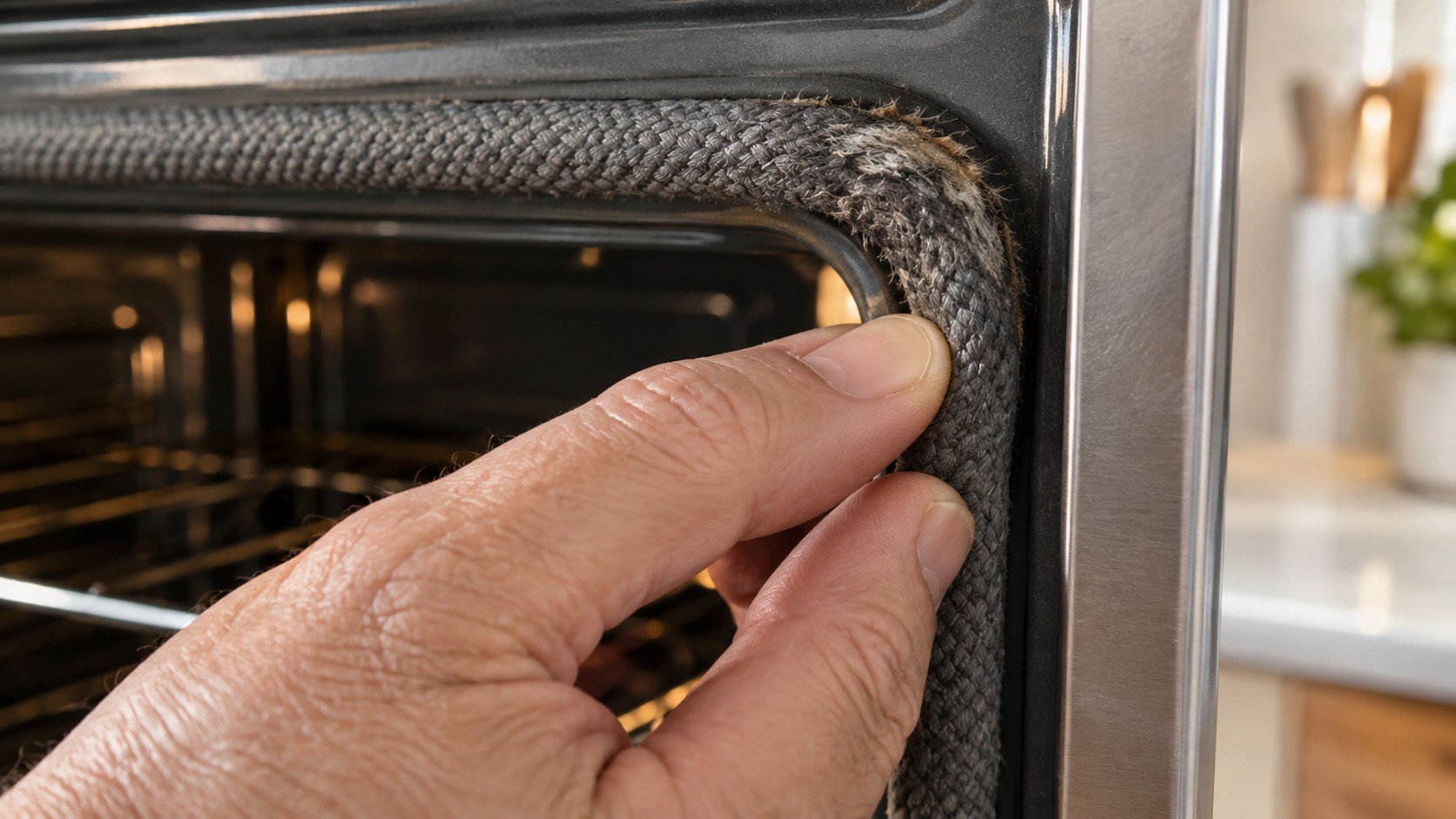
The braided gasket around the oven cavity is the cheapest part in the appliance and the one with the largest effect on everything else. When it flattens or tears, heat escapes at the door edge. The thermostat notices the cavity running cool and calls for more heat, so the element runs longer and hotter than it was designed to, every single time you bake.
Checking it takes ten seconds. Run a finger along the gasket with the oven cold. It should feel springy and unbroken the whole way around. If it is stiff, flattened on one side, or torn at a corner, replace it. That one part keeps the element, the thermostat, and the control board from working harder than they should for years.
Clean Warm, Not Clean Later
The single most useful habit with a Bosch oven is wiping spills while the cavity is still warm — not hot enough to burn you, but warm enough that sugar and grease have not yet turned to carbon. Once a spill has been through a second bake, it is bonded to the enamel and only aggressive methods will shift it.
- Warm cloth, no chemicals. Most fresh spills come off with a damp cloth and nothing else.
- Keep cleaners off the gasket. Oven cleaner degrades the braided seal quickly — clean around it, never on it.
- Never line the floor with foil. It traps heat against the lower element and blocks the airflow the cavity depends on.
- Use pyrolytic cleaning sparingly. A self-clean cycle runs the cavity far above normal baking temperature and is hard on the thermostat and the door lock.
That last point surprises people. The self-clean cycle is a legitimate feature, but it is the most thermally punishing thing the appliance ever does. Two or three times a year is reasonable; monthly is not.
The Convection Fan Needs Airflow, Not Attention
If your Bosch has convection, there is a fan behind a perforated guard at the back of the cavity. It does not need oiling or adjusting. It needs the guard kept clear. Grease film and crumbs on the perforations restrict airflow, which makes the fan work harder and lets heat build up around the motor and the rear element.
Wipe the guard when you clean the cavity. If you hear a new rattle or whine during a convection bake, stop using that mode until it has been checked — a failing fan bearing throws heat into parts that are not meant to take it, and that is how a cheap repair becomes an expensive one.
Temperature Drift Is Real and Invisible
Every oven drifts. A Bosch is better than most, but after several years the cavity may run noticeably off the set point, and nothing on the display will tell you. The symptom is not an error — it is cakes browning too fast, or roasts taking longer than they used to.
- Put a standalone oven thermometer in the center of the middle rack.
- Set the oven to 350°F and let it run a full twenty minutes past the preheat beep.
- Read the thermometer without opening the door more than a moment.
- A gap of more than 25°F is worth correcting through the offset setting or a service call.
Do this twice a year and you will catch drift long before it turns into guesswork in the kitchen.
What Maintenance Will Not Fix
Good habits prevent wear. They do not prevent component failure. If the oven stops heating outright, posts a code, or heats when it should not, that is a fault rather than a maintenance gap — our guide on a Bosch oven that overheats covers the ones that are genuinely urgent, and the oven error code archive explains what the display is reporting.
When to Bring Someone In
A flattened gasket or a dirty fan guard is yours to handle. A door that no longer closes square, a hinge that has lost its spring, or a cavity that will not hold temperature after calibration are not — those involve the door assembly and the control side. Our Bosch oven repair service covers them, and preventive maintenance exists for owners who would rather have it checked than track it themselves.
Diagnostic work starts from $89. The final price is confirmed after the on-site diagnosis, with a written estimate before any work begins. Book a visit if something has changed in how the oven bakes and you cannot account for it.