 Denys Danyliuk
Key Takeaways
- E3 on a Bosch microwave reports a door system malfunction — the interlock switches have not registered the door as properly closed.
- The oven refuses to run on purpose: no microwave energy is generated until the door chain reports shut.
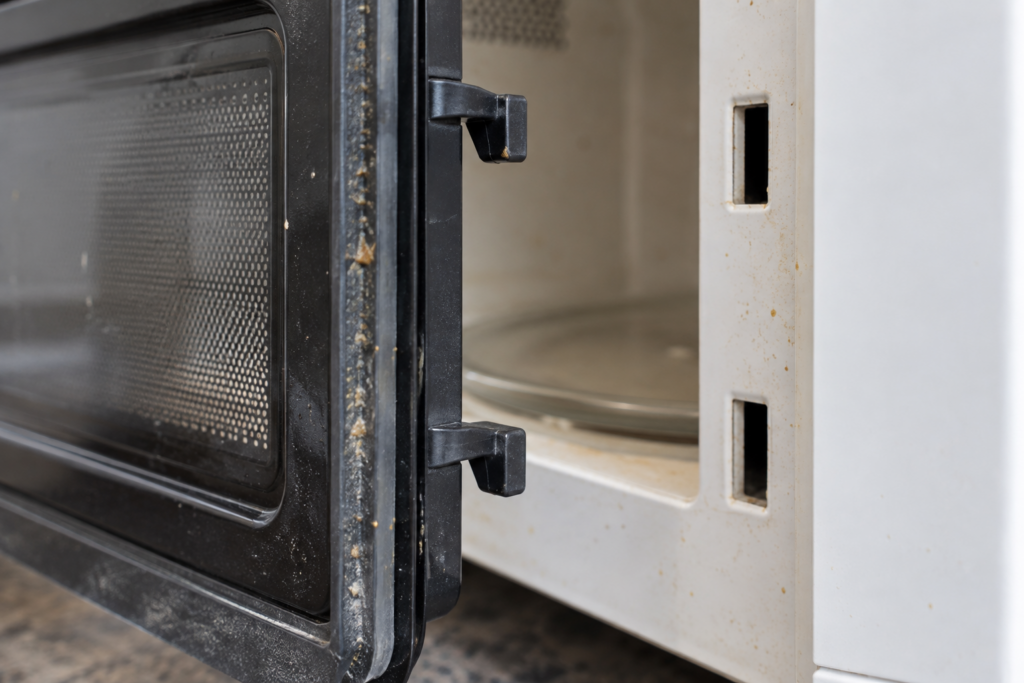
- Hardened food residue around the latch hooks and the seal is the one cause a homeowner can clear.
- If the code returns after a careful clean, a door interlock switch or the latch has failed and needs replacing.
- Never open the cabinet — the high-voltage capacitor holds a charge long after the microwave is unplugged.
The Bottom Line
E3 means the door system, not the magnetron. Clean the latch area and the seal, then run one short test cycle; if the code comes back, the latch or an interlock switch has failed and the microwave should stay off until it is repaired.
You press Start, the display lights up, and instead of running the microwave shows three characters and stops. A Bosch microwave E3 error is not a cooking fault and not a magnetron fault. It is the machine telling you that its door system has not reported itself properly closed, and that it will not produce microwave energy until that changes. On this site the code is filed under the microwave as a door system malfunction, and everything about how you approach it follows from that one fact.
| What you see | What it points to | Where to start |
|---|---|---|
| Door closes but the oven will not start | A switch is not registering the closed position | Clean the latch area and reseat the door |
| Door feels loose or rattles when shut | Latch hooks misaligned with the strike slots | Check for debris, then stop using it |
| Door will not release when you press the button | Latch mechanism jammed | Do not force it — book a technician |
| Code clears after wiping the seal | Food residue was blocking full closure | Make the seal part of your cleaning |
| Code returns within a day or two | A door interlock switch has failed | Diagnostic, from $89 |
What the E3 Code Is Reporting
Every microwave built for the American market carries a set of interlock switches in the door frame. Their job is simple and absolute: no microwave energy is generated unless the door is physically shut and latched. The control board watches those switches, and when the pattern they report does not match a properly closed door, it refuses the cycle and posts a fault.
That is what you are looking at. The site lists the code as a medium severity door system malfunction on the microwave E3 error page, with two likely causes behind it — a latch that has drifted out of alignment with its switch, and an interlock switch that has failed outright. Neither one is a sign that the oven is dangerous to have in the kitchen. Both are a sign that it should not be run.
The Two Things Owners Actually Notice
Before the code appears, there is almost always a physical symptom, and it is worth writing down because it changes what a technician checks first.
- The door will not latch or will not release. The door either refuses to click shut or refuses to pop open when you press the button. This is mechanical, and it points at the latch hooks and hinge rather than at electronics.
- The oven is powered but will not start. Lights, clock, and buttons all work normally, the door appears closed, and the cycle simply never begins because a switch has not registered.
- The code comes and goes. An intermittent E3 usually means a switch that is on its way out or a latch that only sometimes lines up. Intermittent is not better than constant here — it is the same repair, caught earlier.
- Nothing changes after cleaning. If a careful clean of the latch area makes no difference at all, the mechanical explanation is exhausted.
The One Check Worth Doing Yourself
There is exactly one homeowner check on this code, and it is not a repair — it is ruling out the cheapest possible cause. Make sure nothing is preventing the door from closing fully, and clean the latch area.
Open the door and look at the two plastic hooks on its inner edge and the slots they drop into. Splattered sauce dries hard around those slots, and a hardened ridge of it is enough to hold the door a fraction of a millimeter open — more than enough for a switch to read the door as ajar. Wipe the hooks, the slots, and the full perimeter of the seal with a damp cloth. If food residue was the cause, removing it clears the error on the next start.
- Unplug the microwave or switch off its circuit before you clean anything.
- Wipe the latch hooks, the strike slots, and the whole door seal.
- Close the door slowly and listen for a firm, single click.
- Restore power and start a thirty-second run with a cup of water inside.
- If the code returns, stop there and book the diagnostic.
What you should not do is open the cabinet. A microwave stores a serious charge in its high-voltage capacitor long after it is unplugged, and the interlock switches sit right next to it. This is the clearest line in the whole appliance: cleaning is yours, panels are not.
Why You Should Not Keep Using It
The honest answer to whether a microwave with an E3 fault is safe to keep using is no. Not because it will leak — it almost certainly will not, since the interlocks are doing exactly what they were designed to do by refusing to run. The reason is that you no longer know which part of the safety chain is broken, and that chain is the only thing standing between the magnetron and an open door.
Stop immediately if the door does not close firmly, or if the latch is visibly cracked or bent. A damaged latch is a different category of problem from a dirty one, and it needs to be replaced rather than adjusted. Our broader write-up on Bosch microwave safety covers the rest of what that chain does and why it exists.
E3 Is Not an Overheating Code
Owners often arrive at this page after reading about a different fault, so it is worth separating them. E3 is about the door. It says nothing about temperature, nothing about the magnetron, and nothing about the control board.
The code that does report heat is Er4, a critical alert for extreme overheating inside the cavity, and it is handled completely differently. If your display is showing that instead, stop reading here and treat it as urgent. Mixing the two up wastes a service call, because the technician arrives expecting a latch and finds a thermal fault.
It is also worth deciding early whether this machine is worth the repair at all. A built-in or over-the-range unit almost always is; a small countertop model past its warranty often is not, and our guide on whether to repair or replace a Bosch microwave lays out where that line usually falls.
Getting the Door System Checked
If cleaning did not fix it, the next step is testing the interlock switches and the latch assembly, and that is technician work. A switch is a few dollars as a part; the value of the visit is confirming which of the three switches has failed and whether the latch or the hinge pulled it out of alignment in the first place. Replacing a switch on a door that is still misaligned puts you back here in a month.
Our Bosch microwave repair service covers the door system end to end, and a diagnostic visit starts from $89. The final price is confirmed after the on-site diagnosis, and you get a written estimate before any work begins. You can book a visit or send us the model number and the symptom, and we will tell you what the visit is likely to involve.