 Denys Danyliuk
Key Takeaways
- ER4 on a Bosch microwave is a critical extreme-overheating error and a fire safety issue.
- Do not use the microwave and do not try to reset it before a professional inspection.
- If you see smoke, keep the door shut and disconnect the power at the breaker.
- Wait at least 30 minutes and ventilate the kitchen before you go near it.
- Food ignition, metal arcing and a failing magnetron are the three causes.
The Bottom Line
ER4 is a stop-now code. Cut the power, keep the door shut, ventilate and leave the microwave off until a technician has inspected it.
An ER4 on a Bosch microwave is not a nuisance code. The Bosch microwave ER4 page describes it as a critical extreme-overheating error and a fire safety issue that needs professional inspection, and it tells you not to use the microwave, not to reset it and, if there is smoke, to leave the door shut and disconnect the power at the breaker.
| What you see | What it can mean | What to do now |
|---|---|---|
| Smoke or a strong burning smell | Food, grease or packaging has ignited inside | Keep the door shut and cut the power at the breaker |
| Microwave shuts down and will not restart | Overheating protection has stopped it | Do not reset it, leave it unplugged |
| Sparks or flashes before the shutdown | Metal, foil or trim has caused arcing | Stop and keep the door closed |
| Burn marks inside the cavity | Heat damage, possibly to the waveguide cover | Book an inspection before any use |
What Does ER4 Mean on a Bosch Microwave?
ER4 means the microwave has detected extreme overheating and has shut itself down to protect the house. The code page names three causes: food that has ignited, arcing from metal and a magnetron that is generating too much heat in one spot.
The first two are things that happen at the counter: dry food or a greasy wrapper left running, or a metal utensil, foil or metallic trim inside the cavity. The third is a part failure that needs a technician. The microwave cannot tell you which one it was, and the damage may not be visible from outside.
Because the cause is not obvious, the code is treated as the worst case. A microwave that has overheated once may have a cavity coating burned, a waveguide cover scorched or a magnetron that is failing slowly, and any of those can overheat again at the next use. Nothing about the shutdown tells you whether the fault will repeat, which is why the page asks for an inspection rather than a trial run.
How Serious Is the Bosch Microwave Overheating Risk?
It is serious, because the code page calls ER4 a fire safety issue and says professional inspection is mandatory. The danger comes from heat that has built up inside a closed box, in a kitchen that is often full of cabinets, paper and cloth.
- Fire is the main risk. Ignited food or packaging can flare up, and a damaged magnetron can keep heating one spot.
- Damage can be hidden. A scorched waveguide cover or cavity may not show from the front.
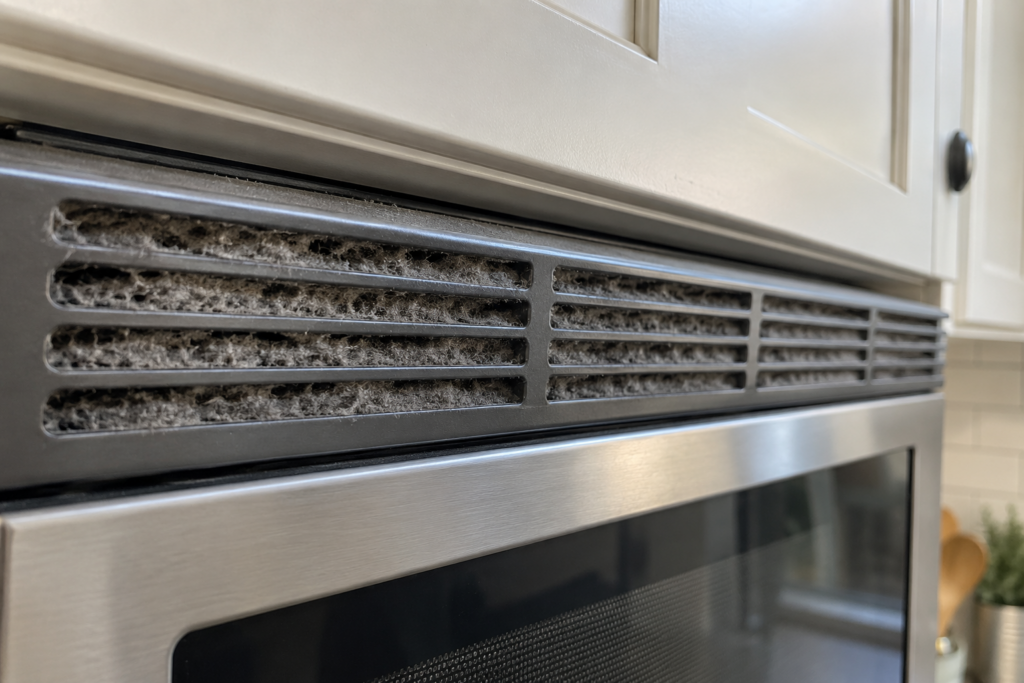
- Built-in models trap heat. Dust in the vents makes a hot cabinet hotter.
What Should You Do in the First Minute?
Disconnect the power at the breaker and keep the door shut. The code page says that opening the door lets in oxygen, which can make a fire flare up, so the safe move is to cut the power and wait.
- Do not open the door if you see smoke or flames.
- Switch the microwave's circuit off at the breaker.
- Wait at least 30 minutes before you go near it.
- Open a window to ventilate the kitchen.
- Leave the microwave unused until a professional has inspected it.
The code page asks for at least 30 minutes after the power is disconnected. Heat inside the cavity takes time to fade, so keep the door shut and the power off for that long before you ventilate and look from a distance at whether anything is still hot.
If there is any fire that does not go out, leave the house and call emergency services first, and deal with the appliance afterwards.
Can You Reset ER4 and Keep Using the Microwave?
No. The code page says not to attempt a reset and that professional inspection is mandatory. A reset only clears the message, and the cause, whether a damaged waveguide cover, a scorched cavity or a magnetron, is still there.
A microwave that runs again after you unplug it for a while has not been repaired. It has simply cooled down, and the same conditions can bring the same overheating back.
When you book the inspection, tell the technician what you were heating, whether you saw sparks or smelled burning and how long the microwave ran before it shut down. Say too whether the vents were clear and whether the door closed normally. Those details narrow the three causes before anyone opens a panel.
Causes You Can Prevent
Two of the three causes on the page are marked as things a homeowner can avoid, and they are worth a quick habit check.
- Never run it empty or with dry food. A cup of water is a safer test than an empty cavity.
- No foil, metal containers or metallic trim. They cause arcing, which heats a small area very fast.
- Cover food, do not wrap it tight. Packaging and grease are fuel.
- Keep the vents clear. On a built-in model, dust in the slots traps heat.
Our general Bosch microwave safety guide covers the everyday rules, and the E3 error guide covers a different code.
Why the Vents Matter on a Built-In Microwave
A built-in microwave sits in a cabinet with little air around it, and the vent slots are how it sheds heat. Dust, grease and stored items in front of the slots turn a normal warm-up into a hot enclosure, and the heat has nowhere to go.
- Look at the slots with a flashlight. A grey film or a clogged grille means airflow is already restricted.
- Keep the area around the unit clear. Cloths, paper and packaging should not sit against it.
- Vacuum the vents with the power off. A soft brush attachment removes loose dust without forcing anything inside.
- Never block the slots to hide a gap. Trim, tape and shelving can all trap heat.
Clean vents do not make an ER4 harmless, but they do lower the chance of the microwave getting there.
What Happens After the Inspection
A technician checks the cavity for burn marks, the waveguide cover for damage and the magnetron for a fault. A scorched cavity or a failed magnetron often tips the decision toward replacement, and our Bosch microwave repair or replace guide shows how to weigh it.
- Cavity and cover sound: the cause was food or arcing, and the microwave may return to service after a check.
- Scorched cavity or cover: the damaged part needs replacing, and the cost decides whether that is sensible.
- Magnetron fault: a part failure, so compare the repair with the age of the microwave.
Our Bosch microwave repair service starts with an inspection. If the smoke was real, emergency repair is the right place to start; otherwise book a visit or tell us what you saw and we will help.