 Denys Danyliuk
Key Takeaways
- E11 on a Bosch refrigerator signals a compressor failure: a seized motor, a failed relay or shorted windings.
- Clicking at the back with no hum means the compressor cannot start; a hum means it is running.
- A relay or an intermittent overheat is usually worth repairing; a seized compressor needs a closer look at age.
- Move perishable food to coolers straight away, because the fridge cannot cool without a compressor.
- A diagnostic separates a small relay job from a sealed-system repair before you spend on parts.
The Bottom Line
E11 is worth fixing when the fault is the start relay or an overheat, and a closer call when the compressor itself has failed on an older machine. Save the food, listen at the back and book a diagnostic.
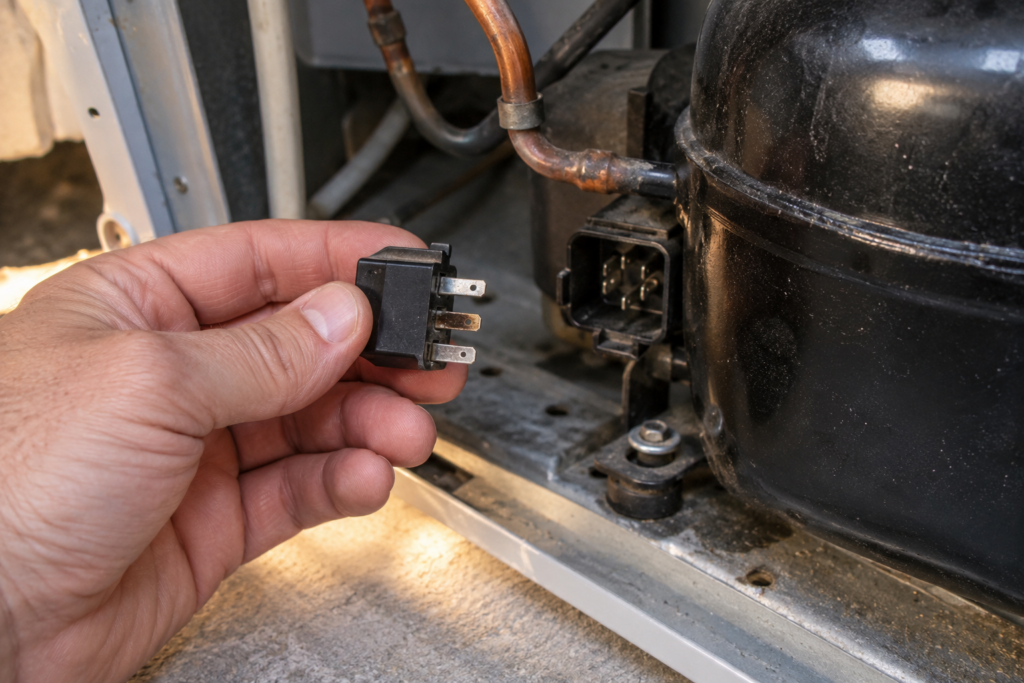
When a Bosch refrigerator shows E11, the compressor is the part in question, and the compressor decides whether the whole machine is worth saving. The Bosch refrigerator E11 page describes it as a compressor failure: a seized motor, a failed start relay or shorted windings. Those three have very different prices, which is why the first job is finding out which one you have.
| What you find | What it means | Repair verdict |
|---|---|---|
| Clicking every few minutes, no hum | Compressor cannot start; relay or compressor | Diagnose first, relay is a small repair |
| Starts again after 10 minutes unplugged | Compressor overheated and cooled down | Worth watching, may be an intermittent fault |
| Silent compressor, both sections warm | Windings or relay open, or board not calling | Diagnose; fix if the fault is not the compressor |
| Confirmed seized or shorted compressor | The sealed system needs a major repair | Weigh against age and the rest of the machine |
What Does E11 Mean on a Bosch Refrigerator?
E11 means the control has found a compressor failure, the part that pumps refrigerant and creates the cold. With it gone, both the fridge and the freezer warm up. The code page lists clicking at the rear, a silent compressor and a complete loss of cooling as the typical signs.
The machine usually warns before it quits. A refrigerator that has been running warm, cycling oddly or clicking now and then may be showing the early stage of the same fault, which is why a diagnostic is worth booking at the first sign and not only after the food has spoiled.
Clicking and silence are not the same thing. Repeated clicking is the start relay trying and failing to start the compressor, while silence points to something upstream or inside the compressor itself.
Is a Bosch Refrigerator E11 Worth Fixing?
Often yes when the fault is the start relay or an intermittent overheating, and it is a close call when the compressor itself has seized or shorted. The compressor is the largest single repair on a refrigerator, so the decision turns on the age of the machine and the state of everything else in it.
- Fix when the machine is relatively young. A compressor repair on a sound, well-kept refrigerator buys years of service.
- Fix when the fault is the relay. A burned start relay or overload protector is a far smaller job than a compressor.
- Think again when the machine is old. Seals, shelves and boards wear too, and a sealed-system repair does not renew them.
- Think again when other faults pile up. A second repair on the same refrigerator in a short time is a sign that it is nearing the end.
Our parent guide, is it worth repairing a Bosch refrigerator, covers the general age rules, and the repair or replace guide goes into the replacement side.
Two Checks Before You Decide
Two simple checks from the code page tell you a lot, and both are safe without removing a panel. They help you describe the fault, and they decide how much you need to worry.
- Put your ear to the back of the refrigerator. A low hum means the compressor is running; clicking without a hum means it cannot start.
- If you hear only clicking every few minutes, the compressor cannot start, which is a diagnostic worth paying for.
- Unplug the refrigerator for 10 minutes and plug it in again. A compressor that overheated sometimes needs time to cool before it restarts.
- If it starts after cooling, the fault may be intermittent, and you should still book a visit before it fails for good.
Neither check repairs anything. They only narrow down which row of the table you are in.
How Age Changes the Answer
A compressor repair is a bet on the rest of the refrigerator, so the age and the history of the machine carry the decision. The same E11 can be a sensible repair on one refrigerator and the wrong spend on another.
- Young and well kept: repair is the default, because the compressor is the one part that has failed and everything else is sound.
- Middle-aged with no other faults: get the diagnostic, then compare the written estimate with the price of a new refrigerator of the same size.
- Old with worn seals and a tired control: a sealed-system repair does not renew those parts, so replacement deserves a hard look.
- Built in and costly to swap: if the refrigerator is fitted into cabinetry, the cost of removing and replacing it weighs toward repair.
Whichever way it goes, the written estimate is what turns a feeling into a decision, and it comes before any work starts.
How Do You Protect the Food While You Decide?
Move perishable food to coolers or a second refrigerator straight away. The code page says the refrigerator cannot cool without a working compressor, so waiting costs food, and food is cheaper to save than to replace.
- Keep the doors shut. A closed refrigerator holds its temperature longer than an open one, and every opening shortens that.
- Freezer first. A full freezer stays cold longer than the fresh-food section, so move the fresh food and dairy first.
- Use ice and a cooler. A cooler with ice covers the gap while the cause is found.
- Throw out what has warmed. Anything that sat warm too long is not worth a risk, whatever the repair decision.
Once the food is safe, the pressure drops and you can decide calmly. A refrigerator that is empty and unplugged for a day costs you nothing more, while one that keeps running with a failing compressor can fail completely at the worst moment.
How Is E11 Different From the Freezer Fan Fault?
E11 is a compressor fault, while E08 is a freezer fan problem that leaves the compressor running. A fan fault is usually a cheaper repair and a far easier decision.
If your refrigerator is merely warm rather than dead, the broader symptom guide for a Bosch refrigerator that is not cooling helps to sort the causes before you assume the worst.
What the Diagnostic Settles
A diagnostic visit starts from $89, and it is the cheapest way to know which row of the table you are in. The technician measures the compressor start current, checks the relay and tests the windings, which separates a small relay job from a sealed-system repair before you spend anything on parts. The final price is confirmed after the on-site diagnosis, with a written estimate before any work begins, and the full range of refrigerator bills is in what Bosch refrigerator repairs cost.
Our Bosch refrigerator repair service covers the relay, the compressor and the control side in one visit. You can book a visit or tell us the model number, the age and what you hear at the back, and we will tell you which side of the decision you are likely on.