 Denys Danyliuk
Key Takeaways
- EMPTY DRIP TRAY is a routine maintenance message, and the machine will not brew until it is dealt with.
- Always empty the drip tray and the grounds container together, because the machine resets when it sees the tray removed and replaced.
- Wash and dry the tray, and wipe the niche while the tray is out.
- A message that persists after emptying can point to a stuck float sensor or a broken tray position sensor.
- An overflowing tray can leak from the front bottom of the machine, so empty it daily.
The Bottom Line
Empty the tray and the grounds container together, rinse, dry and wipe the niche. If the message stays after that, the sensor needs a technician.
Regular Bosch coffee machine drip tray cleaning keeps the EMPTY DRIP TRAY message from interrupting your morning, and it takes only a couple of minutes. The EMPTY DRIP TRAY page calls it a routine maintenance message, and the habit below keeps it that way.
| Part | What collects there | How often to deal with it |
|---|---|---|
| Drip tray | Rinse water and spills | Empty and rinse when the message shows, or daily |
| Grounds container | Used coffee grounds | Empty together with the tray, every time |
| Tray niche in the machine | Splashes, coffee film | Wipe when the tray is out |
| Tray sensor area | Dried coffee and moisture | Wipe gently and dry |
What Does EMPTY DRIP TRAY Mean on a Bosch Coffee Machine?
It means the tray is full or needs emptying, and the machine will not brew a new cup until you do it. Our code page treats it as normal accumulation from regular use, with water or coffee able to leak from the front bottom of the machine if the tray overflows.
The detail that surprises most owners is the reset. The machine clears the message when it detects the tray being pulled out and put back, which is the signal that it was emptied. That is why the page says to empty the tray and the grounds container together: one without the other leaves the machine's counter and your habit out of step.
How Do I Clean the Drip Tray and Grounds Container?
Pull out the tray and the grounds container, discard the grounds, wash the tray, dry it and put both back. That is the whole routine in the code page's own words, and a few details make it last.
- Remove both parts together. Slide out the drip tray with the grounds container, so the machine registers the removal.
- Discard the grounds. Tip them into the bin or compost, and tap the container clear.
- Wash the tray. Warm water and a drop of dish soap are enough; rinse well so no film is left.
- Dry before refitting. A wet tray can hold moisture against the sensor area.
- Replace both and check the message. It should clear when the tray is back in place.
Avoid harsh abrasives on the plastic, which scratch and hold stains, and follow your owner's manual if it says whether the parts can go in a dishwasher.
Pulling the tray out has a second effect that is easy to miss: the machine treats it as the signal that you emptied it. If you only tip the grounds into the bin and leave the tray where it is, the machine never sees the removal, and the message may come back sooner than expected. Slide both parts out, every time.
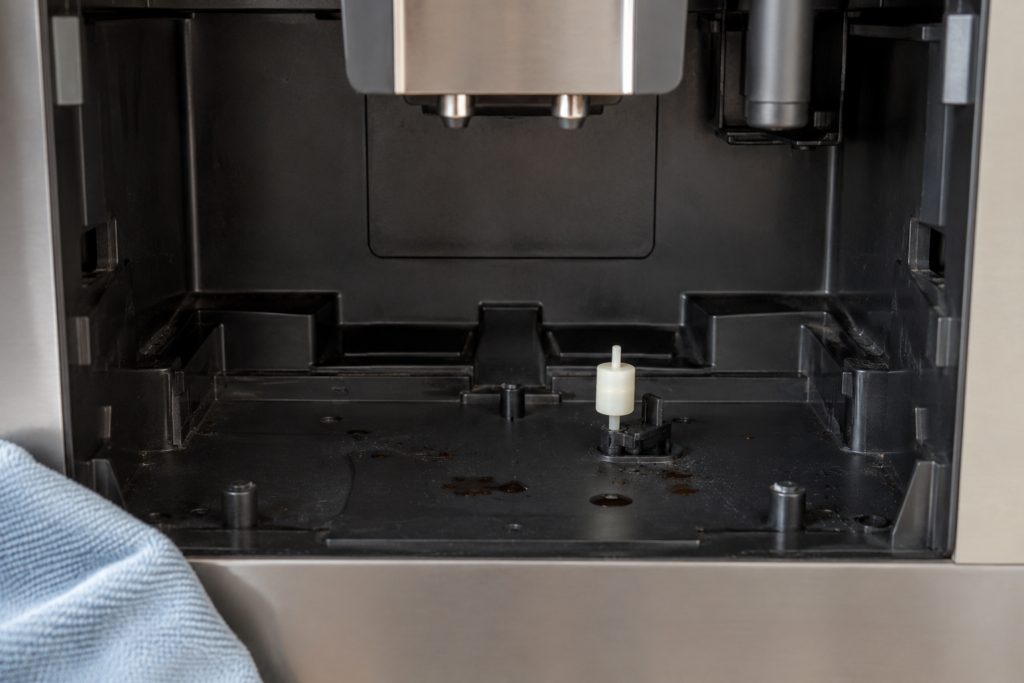
Wiping the Niche While the Tray Is Out
Because the empty slot is where coffee splashes collect and dry, and the tray position is detected there. Wiping it takes seconds and removes the film that builds up at the back.
- Use a damp, soft cloth. Wipe the floor and the sides of the niche.
- Dry the area afterward. Standing moisture is what turns a splash into a stain.
- Do not remove panels. The code page keeps the sensor itself in the technician column, so clean what you can reach and no more.
- Look for dried coffee crust. A hard crust near the tray position can be softened with a damp cloth.
A few small habits make the job quicker and the tray last longer. Keep a spare cloth near the machine, so wiping the tray niche becomes a five-second step rather than a chore. Rinse the tray right after emptying it, because coffee residue is easier to remove before it dries. And store nothing against the front of the machine, where a tray that is pulled out needs room to move.
If you use the machine often, the tray will fill sooner than you expect, since rinse water goes there as well as drips. That is normal, and it is the reason the code page describes the message as routine.
What If the Message Stays After Emptying?
If it persists after you have emptied everything and refitted the tray, the machine is not recognizing the tray, and that is the signal to stop and look further. The code page lists two reasons to call a technician: a stuck float sensor and a broken tray position sensor.
Before you assume either, rule out the simple causes. The tray may not be fully seated, the grounds container may be sitting crooked, or moisture may be on the sensor area. Reseat both parts firmly and dry the niche.
- Reseat the tray. Push it in until it stops.
- Reseat the container. Make sure it sits level.
- Dry the area. Wipe away water around the tray position.
- Try again. Remove the tray once more and replace it, because the machine resets when it sees that movement.
Is a Leaking Drip Tray Dangerous?
It is not dangerous in itself, but it is a reason to act, because water or coffee can leak from the front bottom of the machine onto the counter or into the cabinet. Empty the tray at once and wipe the surface underneath.
A tray that overflows between messages suggests the habit is slipping: the machine is flagging late, or the rinse cycles are filling it faster than you expect. Make it a daily empty, not a wait-for-the-message empty. The same attention to the small parts runs through our Bosch coffee machine maintenance guide.
Cleaning also gives you a daily look at the machine, and that look catches problems early. A tray that is always full after a single cup, coffee that appears on the counter, or a tray that no longer slides in smoothly are small signs that something needs attention. None of them needs a tool, only a moment of notice.
It is also worth knowing what the message does not tell you. It reports that the tray needs emptying, not how full it really is, so an overfull tray can leak before the machine complains. If the tray is visibly near the top, empty it, even with no message on the display.
When you refit the tray, listen for it seating. A tray that is pushed in crooked can leave the sensor area uncovered or the grounds container tilted, and that mimics a fault. A firm push until it stops is the whole technique.
A Simple Routine That Keeps the Tray Clear
A short routine beats an emergency clean, and it matches what the machine wants anyway.
- Daily: empty the tray and grounds container together, rinse the tray.
- Weekly: wipe the niche and dry the tray position.
- After a long break: empty and dry everything before the first cup.
If you see other messages, such as a mineral warning, our page for the Bosch coffee machine CALC message covers the descaling side. When the tray message refuses to clear, our Bosch coffee machine repair service looks at the sensors, and you can book a visit or tell us what the display shows. The diagnostic starts from $89, with the final price confirmed after the on-site diagnosis.