 Denys Danyliuk
Key Takeaways
- FAN-NOISE on a Bosch range hood signals a loose blade, worn bearing, or debris — an early warning, not a failure.
- A monthly filter check and a deeper clean every three to four months catch most causes before they escalate.
- It is safe to keep using a noisy hood short term, but a worn bearing tends to fail rather than get quieter.
- FAN-NOISE is not the same as FAN-FAIL, which means the motor has stopped running altogether.
- If cleaning does not change the noise, it is very likely a bearing, which needs a technician rather than a rag.
The Bottom Line
FAN-NOISE is an early warning — a loose blade, worn bearing, or debris — not a failed fan. Clean the filter and blade first; if the noise persists afterward, it is likely a bearing, and catching it now is cheaper than waiting for FAN-FAIL.
A Bosch range hood fan noise warning is one of the few appliance codes that exists purely to save you a bigger repair later. The site describes FAN-NOISE as abnormal fan sounds signaling a loose blade, a worn bearing, or debris, and its own advice is to catch it early to prevent a larger failure — which makes this a maintenance article rather than a repair one, at least at this stage.
| What you hear | What it usually is | What to do |
|---|---|---|
| Rattling that varies with fan speed | Loose blade or debris caught in the housing | Clean the filter and blade, inspect for debris |
| Steady grinding or squealing | Worn bearing on the fan motor shaft | Book service before it seizes |
| Noise only at high speed | Blade slightly out of balance | Clean and re-check before assuming the worst |
| Noise plus reduced suction | Grease buildup restricting the blade path | Deep clean the blower assembly |
| Sudden loud noise, then silence | Bearing has likely seized | Diagnostic, from $89 |
What Does the Bosch Range Hood FAN-NOISE Warning Mean?
FAN-NOISE means the range hood has detected or the owner has noticed abnormal fan sounds, and the site is specific about the three usual causes: a loose blade, a worn bearing, or debris caught in the fan path. It is filed as an early-warning signal rather than a failure, which is exactly why it belongs in prevention rather than repair — the whole point of catching it here is to avoid the fan actually failing later.
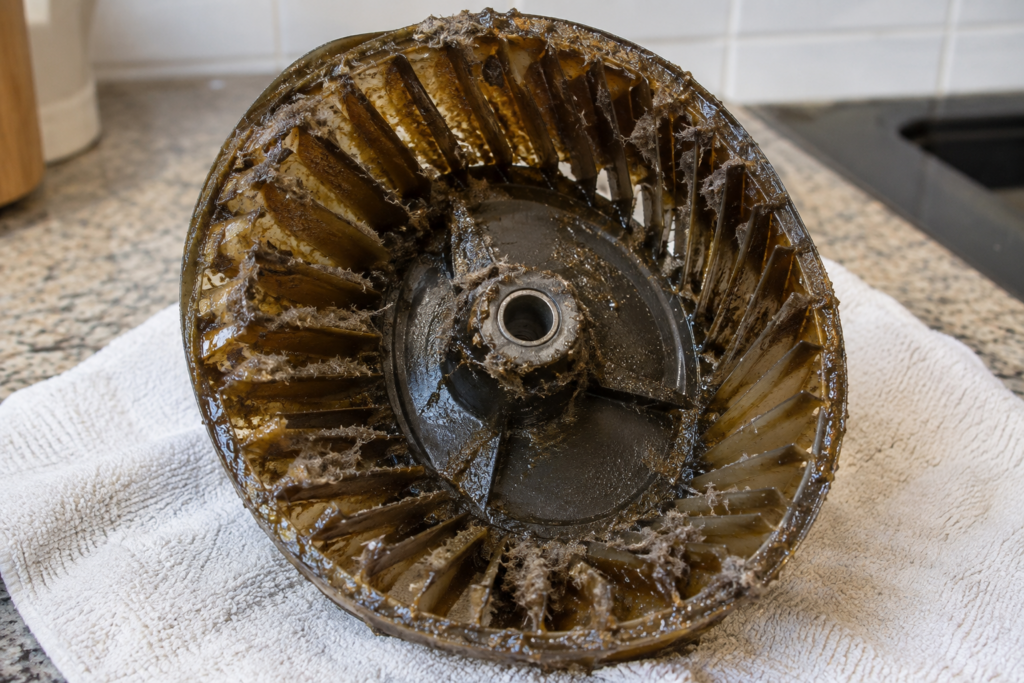
A range hood's fan runs more hours per year than almost any other motor in the kitchen if you cook regularly, and it does so in an environment that constantly deposits grease and fine particulate on every moving surface it reaches. Noise is usually the first sign that this environment is starting to interfere with a part that would otherwise run smoothly for years.
How Often Should You Clean the Range Hood Fan?
A monthly check of the grease filter and a deeper clean of the blade and housing every three to four months is enough to catch most causes of FAN-NOISE before they become a failed motor. Households that cook daily, fry often, or run the hood on high speed regularly should lean toward the more frequent end of that range.
- Turn off the range hood and, where your model allows, disconnect power before removing any covers.
- Remove and wash the metal grease filter in hot, soapy water or run it through the dishwasher if the manufacturer allows it.
- Wipe down the visible fan blade through the filter opening, removing any grease film you can reach.
- Check for any object — a dropped utensil, packaging debris — that may have fallen into the intake.
- Reinstall the filter fully seated and run the fan briefly on low speed to listen for a change.
Is It Safe to Keep Using a Noisy Range Hood?
Yes, in the short term, as long as the noise is a rattle or a mild grinding rather than a sudden seizure. A hood making abnormal noise is still moving air and still doing its job of clearing smoke, steam, and grease-laden air from the kitchen. The safety concern is not the noise itself but what happens if you ignore it.
- A loose blade left alone can eventually contact the housing. This usually escalates from a rattle to a much louder impact noise, and can damage the housing itself.
- A worn bearing tends to fail rather than heal. Bearings do not get quieter with time; a squeal today is very often a seized motor within weeks or months.
- A fan that seizes stops ventilating the kitchen entirely. That matters most over a gas cooktop, where the hood is also clearing combustion byproducts, not just cooking odors.
- Grease buildup that caused the noise is itself a fire risk over time. Cleaning solves two problems at once — the noise and the accumulated grease.
FAN-NOISE Is Not the Same as a Failed Fan
It is worth distinguishing this warning from an outright failure. FAN-FAIL means the motor itself has stopped running altogether, and the site treats it as an urgent fault because smoke and grease then have nowhere to go. FAN-NOISE is the stage before that — the motor is still running, just not smoothly, which is exactly the window where cleaning and inspection can prevent the more serious code from ever appearing.
If your hood has gone from noisy to silent, you have moved from FAN-NOISE to FAN-FAIL territory, and the response changes from maintenance to a service call.
- Motor running but noisy: FAN-NOISE, clean and inspect first.
- Motor stopped entirely, silent: FAN-FAIL, an urgent fault needing service.
- Noise getting steadily worse over days or weeks: treat it as heading toward FAN-FAIL, not staying at FAN-NOISE.
When Cleaning Is Not Enough
If a thorough filter and blade cleaning does not change the noise at all, the cause is very likely mechanical rather than grease-related — a bearing wearing down inside the motor housing, which is not something a homeowner can service directly on a sealed motor assembly. A grinding or squealing sound that persists after cleaning is the clearest sign of this, and it is worth having it looked at soon rather than waiting for the fan to stop entirely.
A technician can usually confirm a bearing issue in a few minutes by listening to the motor with the blade removed, which isolates the sound from anything related to the blade itself. That quick check is what separates a simple part swap from a longer diagnosis, and it is one reason a professional visit is worth it once cleaning has ruled out the obvious cause.
Our Bosch range hood repair service covers the fan motor, the bearing assembly, and the blower housing as one system, and a diagnostic visit starts from $89. The final price is confirmed after the on-site diagnosis, and you receive a written estimate before any work begins.
Keeping the Rest of the Kitchen Ventilation in Mind
A range hood is one part of a kitchen's overall safety picture, alongside the cooktop it sits above. Our guide to Bosch cooktop safety covers what else is worth checking in the same area, since a hood and a cooktop are serviced by the same visit far more often than owners expect. The two systems share the same environment of heat and grease, and a hood that has been quietly getting louder for months is one of the more common findings during a routine cooktop visit.
Keeping the fan clean also protects the rest of the ventilation path. A hood that is straining against a dirty blade or a partly worn bearing often runs longer than it needs to on high speed, which pushes more grease-laden air through the ducting and toward the exterior vent. Our broader guide to routine Bosch appliance maintenance covers the same principle of catching small wear before it becomes a bigger repair, applied across the rest of the kitchen. You can book a visit or describe the noise and when it started, and we will tell you whether it sounds like a cleaning job or a bearing.