 Denys Danyliuk
Key Takeaways
- E106 means the Bosch oven cannot engage its door lock, which mainly stops the self-clean cycle.
- E107 means the door will not unlock after cleaning, usually because the oven has not cooled enough.
- Wait 1 to 2 hours, then switch the breaker off for 10 minutes if the door is still locked.
- Never pry or force a locked oven door; the lock is a safety device.
- A grinding latch motor, a door that will not close, or a door locked 3+ hours after cleaning means call a technician.
The Bottom Line
The lock is protecting you, so wait, cool and power cycle rather than force the door. If the latch grinds or stays locked after cooling, book a diagnostic.
A Bosch oven E106 door lock message means the oven cannot lock its door, and its neighbor E107 means the door will not unlock after cleaning. Both belong to the self-clean cycle, and both are covered on our pages for E106 and E107. The safety point is the same for both: the lock exists because the oven gets extremely hot, so do not force it.
| Message | What you see | Safe next step |
|---|---|---|
| E106 | Self-clean will not start, latch clicks but does not engage | Clean around the latch, power cycle |
| E107 | Door still locked after the cycle ended | Wait 1 to 2 hours for the oven to cool |
| E107 after cooling | Lock icon stays lit | Breaker off for 10 minutes |
| Grinding from the latch motor | Door will not close or lock | Stop and call a technician |
What Does Bosch Oven E106 Mean?
E106 means the door lock mechanism cannot engage. The code page explains that this mainly affects the self-cleaning function, which requires a locked door for safety at high temperatures, while normal baking and broiling are not affected.
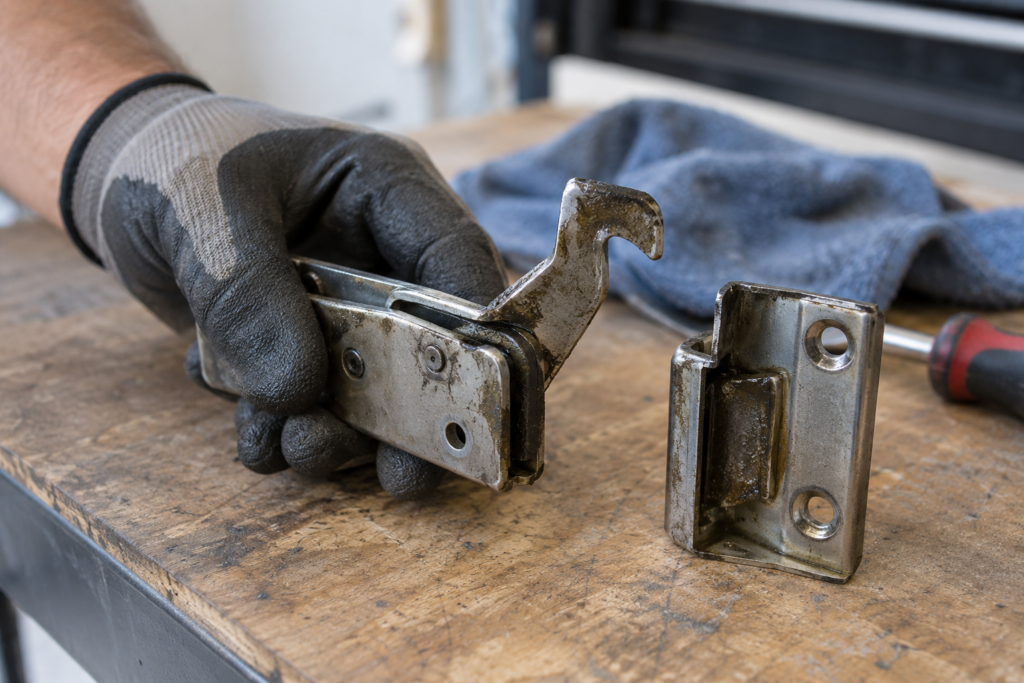
You will notice it as a self-clean cycle that refuses to begin, or a latch that clicks as if trying but does not lock the door securely. The two usual causes are a misaligned latch, where the hook and strike plate do not meet properly, and a latch motor that has burned out. Both need a technician.
E106 and E107 look alike on the display but point in opposite directions. E106 is about the lock failing to engage, so the oven will not begin a cleaning cycle. E107 is about the lock failing to release, so the door stays shut when the cycle is over. Knowing which one you have saves you from fixing the wrong thing.
Why Will My Bosch Oven Door Not Unlock After Self-Clean?
Most of the time the oven simply has not cooled enough yet. The E107 page says the door will not unlock until the oven drops below a safe temperature, which it gives as around 450°F, and that usually takes 1 to 2 hours after the cycle ends.
- Wait for full cooling. The lock is a safety feature, and it releases when it is safe.
- Then power cycle. If it is still locked, switch the breaker off for 10 minutes; most Bosch locks have a power-off safety release.
- Watch the lock icon. If it stays lit after the oven is cool, the lock is stuck.
- Call after 3 hours. The page lists a door locked 3+ hours after cleaning as a stop sign.
Is It Safe to Force a Locked Oven Door?
No, never pry, hit or force a locked door open, because the lock is there to hold it shut at self-clean temperatures. Forcing it can bend the latch hook, break the strike plate and leave an oven whose door no longer seals.
Think about what is on the other side. During the cycle the cavity is far hotter than in normal cooking, and a door that opens early releases that heat and smoke into the kitchen. Waiting costs time; forcing risks a burn and a repair.
- Do not pry at the door gap. A screwdriver can damage the seal and the latch.
- Do not defeat the lock. It is a safety device, not an obstacle.
- Keep children and pets away. The door and the area around it stay hot for a long time.
- Open a window. Self-clean produces smoke and odor, which settle faster with fresh air.
It also helps to remember what the lock actually does. During self-clean the oven runs far above normal cooking temperatures, and the lock keeps the door shut until the cavity has cooled below the unlock threshold. That is the same safety function whether the oven is clean or dirty, which is why a lock fault matters more than the missing cleaning cycle.
When to Stop and Call a Technician
Stop when the latch motor makes a grinding noise, the door cannot close at all, or the door stays locked 3 hours after the cycle and a power cycle does not release it. The code pages list these as the moments to stop immediately.
Other triggers are a latch motor that does not respond, a door that is out of alignment, and a bent or damaged latch hook. None of these is a homeowner job, and grease around the latch is the only thing the page asks you to clean yourself.
- Switch the oven off at the breaker.
- Let it cool fully.
- Do not use self-clean again until the lock works.
- Normal baking and broiling remain available if the door closes and seals.
- Book a diagnostic for the latch.
Remember that normal cooking is not the issue. The E106 page says baking and broiling still work, so you are not forced to stop using the oven the moment you see the message. The sensible rule is to skip self-clean until the lock is fixed, and to clean the oven by hand in the meantime once it has fully cooled.
How Do I Avoid Lock Trouble Next Time?
Keep the latch area clean and do not start self-clean when the door will not close fully. Grease buildup around the latch can prevent proper engagement, which is the cause the E106 page puts first.
- Wipe the latch area. Do it when the oven is cool, before the cycle.
- Remove loose spills first. Heavy spills smoke and bake onto the lock area.
- Check that nothing blocks the door. A rack or pan edge in the way stops it closing fully.
- Allow cooling time. Plan the cycle for an evening so the oven can cool undisturbed.
Our guide to Bosch oven safety and overheating covers the wider rules, and the Bosch oven maintenance guide covers regular care.
If you plan to use self-clean often, treat the lock as a wear part. A latch motor that has started to grind is a warning you can hear, and it is better to book before the motor fails with the door locked and the oven full of dinner. A short note of the sounds you heard helps the technician match the motor.
What Happens at the Visit
The technician checks the latch alignment, the hook and strike plate, and the latch motor, and tells you which part is at fault. The diagnostic starts from $89, and the final price is confirmed after the on-site diagnosis, with a written estimate before any work begins.
Our Bosch oven repair service covers the latch and its motor. You can book a visit or describe what the lock did, and say which of E106 or E107 you saw, so the right part comes with the technician.