 Denys Danyliuk
Key Takeaways
- Cracked ceramic glass is the one failure that reliably ends a cooktop — the surface is structural and seals the electronics beneath it.
- A single dead element, burner, or igniter is worth repairing at almost any age, because those parts are independent of each other.
- Induction power modules are worth replacing under eight years and rarely worth it after, since the remaining modules are the same age.
- A code affecting one zone is good news; a code affecting the whole control surface is not.
- A zone that will not switch off is a reason to stop using the appliance, not a reason to wait and see.
The Bottom Line
If one zone failed, repair it regardless of age. If the glass is cracked or an induction module failed on a cooktop past eight years, replacement is the better use of the money.
Cooktops age differently from every other appliance in the kitchen. There is no compressor to wear out and no drum to go out of balance — just a glass surface, a set of elements or burners, and the electronics that drive them. That makes the repair-or-replace decision unusually clear, as long as you know which of those three failed.
| What failed | Age under 8 years | Age over 8 years |
|---|---|---|
| Single element or burner | Repair | Repair |
| Touch control panel | Repair | Worth pricing both ways |
| Cracked glass surface | Worth pricing both ways | Replace |
| Induction power module | Repair | Replace |
| Repeated unrelated faults | Investigate wiring | Replace |
The Glass Usually Decides It
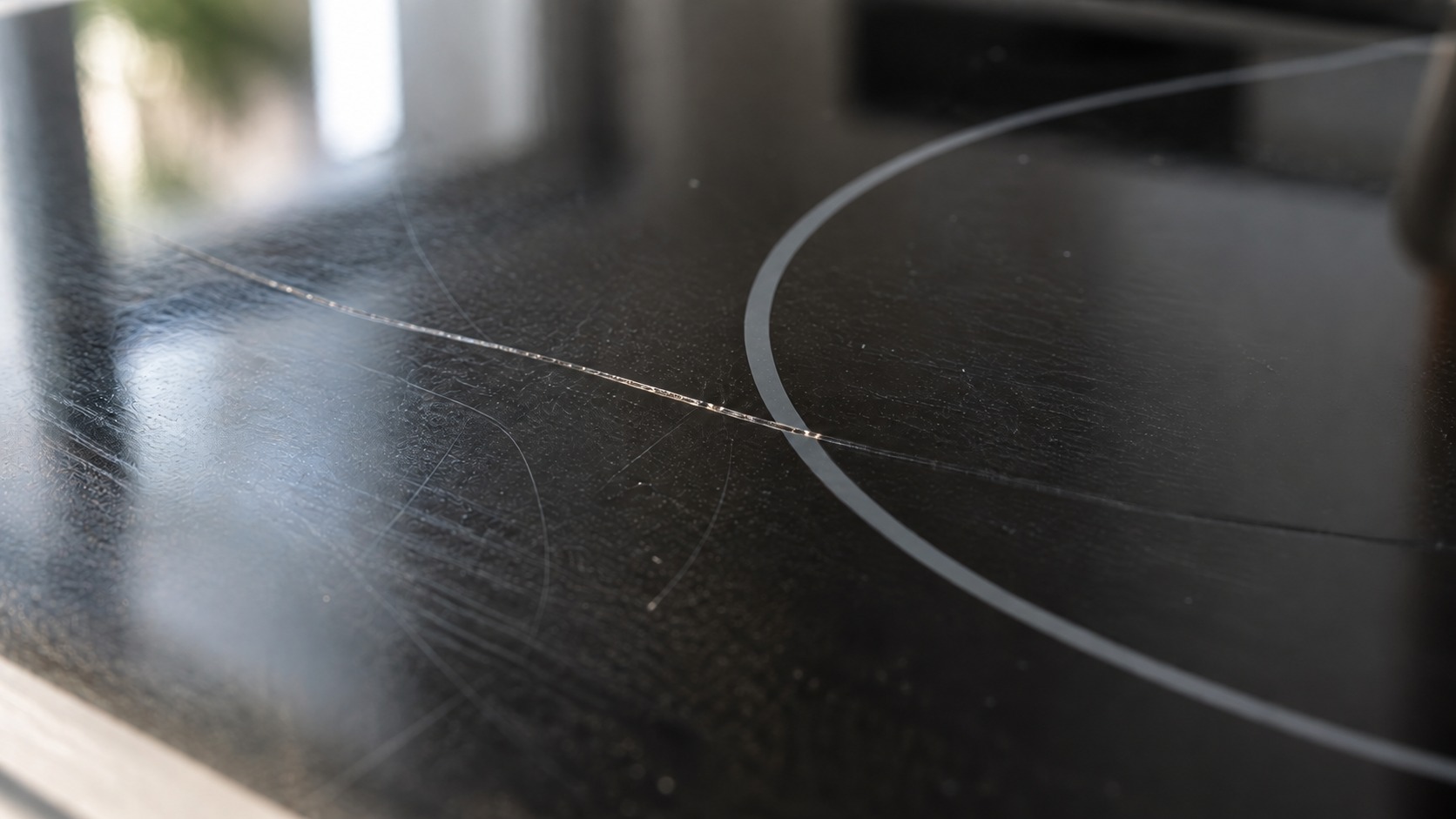
A cracked or chipped ceramic surface is the one failure that reliably ends a cooktop's life. The glass is not a cosmetic panel — it is the structural top of the appliance and the seal that keeps spills out of the electronics underneath. Replacing it means a new glass assembly, and on most Bosch models that single part carries a large share of the cost of a whole new unit.
There is also a safety dimension. A crack that reaches an element lets liquid through to live components. This is not a repair to postpone or to work around, and it is the clearest case where a technician will tell you to replace rather than repair.
Single Elements and Burners Are Almost Always Worth Fixing
If one zone stopped working and the others behave normally, the odds are strongly in favor of repair regardless of age. Radiant elements, gas burner assemblies, igniters, and the switches behind them are individually inexpensive and independently replaceable. A fifteen-year-old Bosch cooktop with one dead burner is a straightforward job.
- One zone dead, others fine. Element, switch, or a single connection — a contained repair.
- A burner that clicks but will not light. Usually the igniter or a fouled port, not the cooktop.
- A zone that heats but will not hold a setting. The infinite switch behind that dial.
- All zones behave the same way. Now you are looking at the control side, and the calculation changes.
Induction Changes the Math
Induction cooktops carry a power module for each zone or pair of zones, and those modules are the expensive part of the appliance. On a unit under eight years old, replacing one is generally worth it — the rest of the cooktop has plenty of life left and the glass is intact.
Past that point the arithmetic turns. Once modules start failing, the others are the same age and have seen the same heat cycles. Paying for one module on a ten-year-old induction top often means paying for another within a couple of years. Before you decide, look up what the unit is actually reporting in the Bosch cooktop error code archive — a module fault and a control fault look identical from the counter.
What the Error Codes Tell You
Bosch cooktops report faults rather than simply going dead, and the code narrows the decision before anyone removes the unit from the counter. Codes pointing at a single zone are good news. Codes involving the whole control surface, or codes that keep returning after a reset, are not.
A fault such as F8 is worth looking up before you decide anything, because the same symptom on the surface can come from a cheap switch or from the control board. The code is the cheapest diagnostic you will ever run.
- Note whether one zone or all zones are affected.
- Write down the exact code and whether it returns after a power cycle.
- Inspect the glass closely in daylight for hairline cracks around the zones.
- Check the age — the eight-year mark is where most of these decisions turn.
What Actually Wears Out
Cooktops have fewer moving parts than anything else in the kitchen, so they age in a specific and fairly predictable order. Knowing that order tells you whether a fault is early or late in the appliance's life.
- Switches and igniters go first. They are mechanical, they cycle constantly, and they are cheap to replace.
- Surface elements go next. Radiant coils fail from thermal cycling, usually on the zone that gets the most use.
- Touch controls follow. Heat and spills gradually degrade the membrane behind the glass.
- Power electronics go last. On an induction top these are the modules; on a radiant top it is the relay board.
A fault that matches the early part of that list on an older appliance is good news — it means the expensive components are still healthy. A power electronics fault on a young cooktop is unusual and worth investigating rather than simply replacing, because it can point at a supply problem in the house rather than at the appliance.
Do Not Keep Using a Faulty Cooktop
A cooktop that misbehaves is different from a dishwasher that misbehaves. A zone that will not switch off, a surface that stays hot after everything is turned down, or a gas burner that lights unevenly are all reasons to stop using the appliance until it has been looked at. Our guide to Bosch cooktop safety covers what warrants shutting off the circuit.
Getting a Real Answer
The honest version of this question cannot be settled from a photograph. Whether it is worth repairing a Bosch cooktop depends on which component failed, and that takes a meter rather than an opinion. Diagnostic work starts from $89, and our Bosch cooktop repair service covers radiant, gas, and induction models.
The final price is confirmed after the on-site diagnosis, and a written estimate comes before any work begins. If the answer turns out to be replacement, you will hear that too — book a visit and we will tell you which side of the line your cooktop falls on.